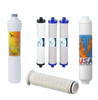
Whole House Filtration Systems

Fleck 5600 Econominder Timer Carbon Filter

Fleck 5600 SXT Digital Timer Carbon Filter

Fleck 5800 Digital Timer Carbon Filter
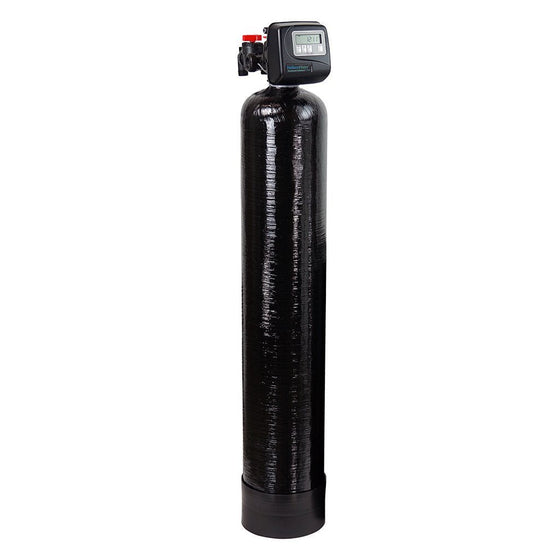
Nelsen - High Flow Residential Timer Carbon Filter

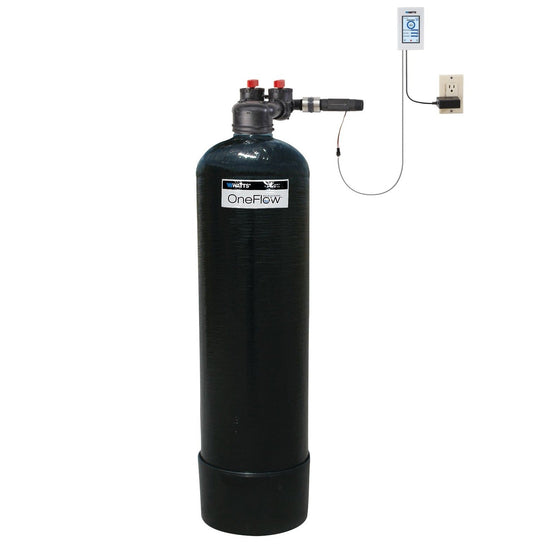
Watts - OFRES Res Scale System with Smart Monitor 1" MNPT
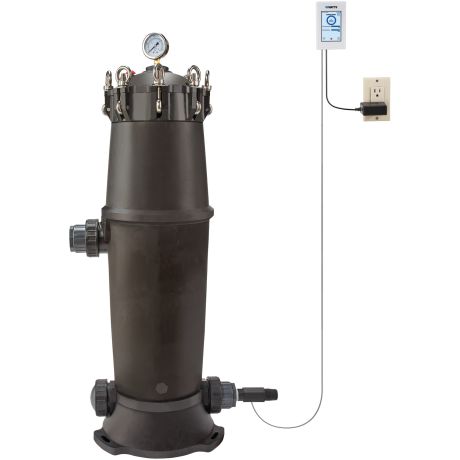
Watts-BB-S101 Whole Home System With Cart and Monitor


Isopure Water · Point-of-Entry Water Treatment
Whole House Filtration — Clean Water from Every Tap
One system installed at the point where water enters your home treats every drop — drinking water, shower water, laundry water, and everything in between. No more chlorine odors, sediment, or contaminants reaching your family or your appliances.
Unlike under-sink or countertop filters that treat only one tap, a whole-house filtration system is installed at your main water supply line — treating 100% of the water before it reaches any faucet, shower, appliance, or water heater in your home. The result is comprehensive protection at every point of use, with no cartridges to swap monthly — most whole-house systems backwash automatically on a set schedule.
How It Works
What Makes Whole-House Filtration Different
Point-of-Entry (POE)
Installed on your main supply line before the water branches to any fixture. Every tap, shower, toilet, appliance, and water heater in your home receives treated water — not just the kitchen sink.
Automatic Backwashing
Unlike cartridge filters that need monthly replacements, whole-house tank systems regenerate themselves automatically. The control valve initiates a backwash cycle on your programmed schedule — typically every 3–7 days overnight.
Large Media Bed
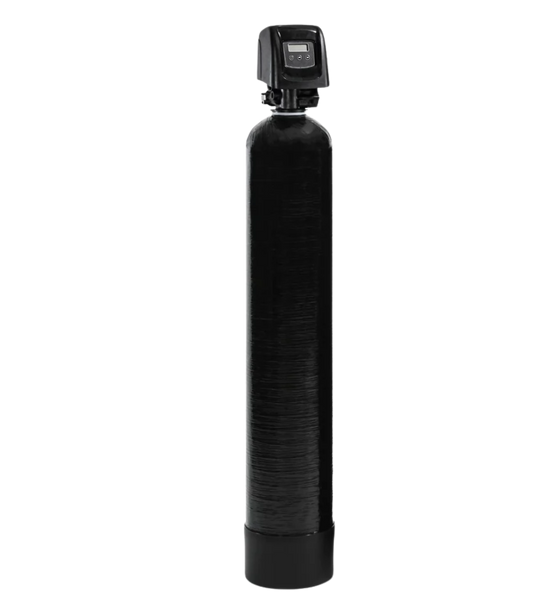
A tall fiberglass mineral tank packed with 1–3 cubic feet of filtration media provides high flow rates and long contact time — treating your entire household flow without pressure drop.
Protects Your Whole System
By treating water at entry, a whole-house filter protects your water heater, softener resin, RO membrane, dishwasher, washing machine, and plumbing from chlorine, sediment, and oxidative damage.
System Types
Choosing the Right Whole-House System
Carbon Filter Systems
The most common whole-house system. A large activated carbon media bed removes chlorine, taste, odors, and VOCs from all household water. Available with coconut shell or catalytic carbon media, and Fleck 5600 or 5800 valve options. Ideal for city water with chlorine treatment.
Best For: City Water · Chlorine & OdorIron & Hydrogen Sulfide Filters
Specialized media systems (like Katalox Light) designed to oxidize and filter out dissolved iron, manganese, and hydrogen sulfide — the rotten-egg odor common in well water. Catalytic carbon also addresses H₂S. Match the system to your specific water test results.
Best For: Well Water · Iron · H₂S OdorScale Prevention Systems
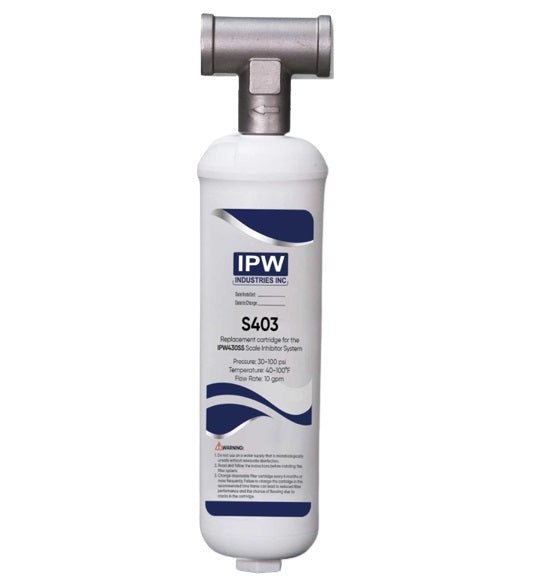
Salt-free systems (like Watts OneFlow and IPW PSE2000) condition hardness minerals so they can't form scale deposits — without removing them from the water or adding sodium. No brine tank, no regeneration waste. A good option for eco-conscious households or those who prefer not to use salt.
Best For: Scale · Salt-Free · Eco-FriendlyBig Blue Sediment Systems
High-flow 20" Big Blue housing systems with large-diameter cartridge filters. Simple, cost-effective, and ideal as a first-stage pre-filter before a softener or carbon system. Perfect for well water with heavy sediment or as a standalone city water sediment barrier.
Best For: Sediment · Pre-Filtration · Well WaterMulti-Stage Combo Systems
Full whole-house treatment combining sediment pre-filtration, carbon filtration, and salt-free scale conditioning in a single integrated system (like the IPW PSE2000). Designed for households that want comprehensive treatment without a softener and brine tank.
Best For: All-in-One · No Salt RequiredSpecialty & High-Flow Systems
Commercial-grade or high-demand residential systems (like Watts BB-S101) for larger homes, well water with complex chemistry, or light commercial applications. Available in higher GPM ratings to handle peak demand without pressure loss.
Best For: High Flow · Complex Water · CommercialMedia Options
Coconut Shell Carbon vs. Catalytic Carbon
Standard Activated Carbon
- Removes chlorine, taste, and odor
- Reduces VOCs, pesticides, and organic compounds
- Excellent for standard chlorinated municipal water
- NSF-certified, sustainable carbon source
- Most cost-effective option for city water
Enhanced Catalytic Carbon
- Removes chloramines — standard carbon cannot do this
- Eliminates hydrogen sulfide / rotten-egg odor
- All the capabilities of coconut shell carbon, plus more
- Enhanced catalytic surface for advanced oxidation reactions
- Required for chloraminated municipal supplies
Chloramines vs. Chlorine: Many large US cities have switched from chlorine to chloramines as a disinfectant. Standard activated carbon (including coconut shell) cannot effectively remove chloramines — you need catalytic carbon for that. Check your annual water quality report or call your utility to confirm which disinfectant is used before selecting your media.
Sizing Guide
Choosing the Right Tank Size
| Media Volume | Tank Dimensions | Flow Rate | Best For |
|---|---|---|---|
| 1.0 Cu Ft | 9" × 48" | Up to 7 GPM | 1–2 people, lower water demand |
| 1.5 Cu Ft ★ | 10" × 54" | Up to 10 GPM | 2–4 people — most popular whole-house size |
| 2.0 Cu Ft | 12" × 52" | Up to 13 GPM | 3–5 people, moderate to high usage |
| 2.5 Cu Ft | 13" × 54" | Up to 15 GPM | 4–6 people or high-demand homes |
| 3.0 Cu Ft | 14" × 65" | Up to 18 GPM | Large households or light commercial |
Flow rate matters: Match the system's flow rate to your home's peak demand. A typical shower runs at 2 GPM, a dishwasher at 1.5 GPM. If three showers and the dishwasher run simultaneously, you need at least 7.5 GPM. Size up if in doubt — a larger bed always means longer contact time and better filtration, and the system will simply backwash less frequently.
Buyer's Guide
How to Choose the Right System
-
Test Your Water First
Before selecting a system, know what you're treating. City water users should check their annual water quality report for chlorine vs. chloramine. Well water users should test for iron, manganese, hardness, pH, TDS, and bacteria. The test results determine the media type and any pre-treatment needed.
-
Match Media to Your Contaminants
Chlorine and VOCs → Coconut Shell Carbon. Chloramines → Catalytic Carbon. Iron and H₂S → Iron filtration media (Katalox Light). Scale prevention without salt → OneFlow or template-assisted crystallization media. If you have multiple concerns, a combo system or staged approach may be the best fit.
-
Calculate Your Peak Flow Rate
Add up the flow rates of all fixtures that could run simultaneously at peak usage. A 1.5 cu ft system handles most 2–4 person homes at 7–10 GPM. Larger homes or homes with multiple bathrooms in simultaneous use should consider 2.0–3.0 cu ft systems to avoid pressure drop.
-
Decide on Valve Type
The Fleck 5600 is a proven workhorse — economical and reliable for most residential applications. The Fleck 5800 upgrades to a DC motor for stronger, faster gear changes and an improved circuit board. If your home has high water usage or you want the latest electronics, the 5800 is worth the step up.
-
Plan Your Full System Stack
A whole-house carbon filter works best as part of a layered approach: a sediment pre-filter first, then your carbon system, then a water softener if needed, with an RO system at the kitchen sink for drinking water. Each stage handles what the previous one can't, and each one protects the stages downstream.
Maintenance
Keeping Your System Running at Peak Performance
Set Backwash Schedule
Program your control valve to backwash every 3–7 days at 2:00 AM. High-use homes or high-sediment water may need more frequent cycles.
Monitor Taste & Odor
If chlorine taste or odor returns at your taps, the media may be exhausted. Carbon media typically lasts 5–10 years under normal conditions.
Inspect Valve Seals
Every 2–3 years, check control valve seals and spacers for wear. Fleck replacement parts are widely available and most are straightforward DIY repairs.
Check Drain Line Freely Flows
Ensure the backwash drain line is clear and draining properly. A blocked drain prevents complete backwash cycles and reduces media regeneration effectiveness.
Media Replacement
Activated carbon media typically lasts 5–10 years. Catalytic carbon and specialty iron media may last longer depending on water chemistry and flow volume.
Not sure which system is right for your water? Our water treatment specialists can review your water test results and recommend the right system, media type, and tank size for your home. Call (877) 541-6603 or email support@isopurewater.com — custom configurations are always available.
Better Showers
Chlorine-free water is gentler on skin and hair from every showerhead in your home — not just the kitchen tap.
Protects Appliances
Removes chlorine and oxidative compounds that degrade water heater anodes, washing machine seals, and downstream RO membranes.
Better Tasting Food & Drinks
Filtered water throughout the home means cleaner ice, better-tasting coffee, and food cooked without chlorine interference.
Zero Monthly Cartridges
Automatic backwashing means no cartridges to buy or swap. One system, one installation, years of maintenance-free operation.