Water Softeners

Fleck 5600 Econominder Meter Water Softener

Fleck 5600 SXT Digital Metered Whole House Water Softener

Fleck 5800 SXT Digital Metered Whole House Water Softener

IPW Industries Inc's High Efficiency Whole House Water Softener

Isopure Water · Whole-House Water Treatment
Water Softeners — End Hard Water for Good
Calcium and magnesium in hard water silently destroy plumbing, shorten appliance life, and leave your skin, hair, and laundry worse off. A properly sized water softener eliminates the problem at the source.
Hard water affects more than 85% of US homes. The minerals it carries — primarily calcium and magnesium — are invisible in the water itself but leave their mark everywhere: scale on fixtures, shortened appliance lifespans, dry skin and hair, and soap that won't lather properly. A whole-house water softener eliminates these issues at the point of entry, so every tap in your home delivers genuinely soft water.
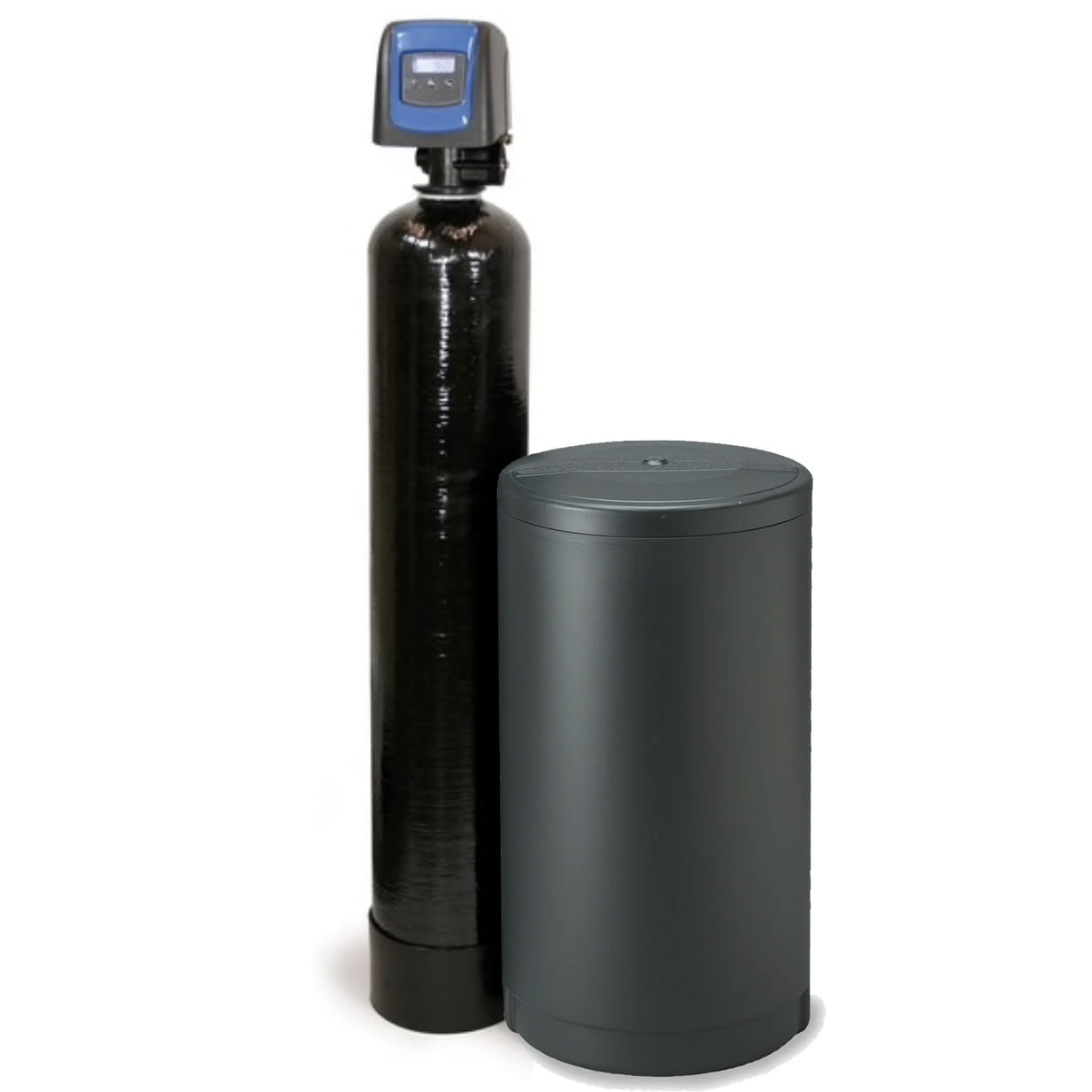
Fleck
5800 SXT · Digital Meter Water Softener
48,000 Grain / 1.5 Cu Ft · 8% Standard Resin · 5800 SXT Valve
Our most popular water softener. The Fleck 5800 SXT upgrades the legendary 5600 SXT with a stronger DC motor, improved circuit board, and the same intuitive programming interface — delivering demand-initiated regeneration that only runs when your water usage calls for it. Available in six grain capacities with 8% or 10% resin, and 5800 SXT or XTR2 valve.
The Problem
Hard Water vs. Soft Water — What's the Difference?
💧 Hard Water
- White scale deposits on fixtures and shower doors
- Reduced lifespan on water heaters, dishwashers, and washing machines
- Clogged pipes from mineral buildup over time
- Dry, irritated skin and dull, brittle hair after showering
- Soap and detergent won't lather — you use more and get less
- Spotty dishes and glassware even after washing
- Stiff, rough laundry — colors fade faster
✨ Soft Water
- No scale on fixtures, showerheads, or plumbing
- Appliances last longer and run more efficiently
- Water heaters operate at full efficiency — lower energy bills
- Softer skin and noticeably shinier, healthier hair
- Rich lather with far less soap and detergent
- Spot-free dishes, glassware, and stainless steel
- Softer laundry, brighter colors, longer fabric life
The Science
How a Water Softener Works
Mineral-Laden Water Flows In
Your incoming water supply — whether city water or well water — carries dissolved calcium (Ca²⁺) and magnesium (Mg²⁺) ions that cause hardness. The water enters the mineral tank from the top and flows downward through the resin bed.
Resin Beads Capture Hardness Minerals
The mineral tank contains millions of tiny resin beads covered in negatively charged sodium ions. As hard water passes through, calcium and magnesium ions — which carry a stronger positive charge — are magnetically attracted to and captured by the resin beads, releasing sodium ions into the water in their place. The result is softened water exiting the tank.
Softened Water Flows to Every Tap
The now-softened water exits the mineral tank and flows throughout your home's plumbing — to every faucet, shower, appliance, and water heater. No hardness minerals, no scale buildup, no more damage.
Resin Bed Recharges with Salt
When the resin beads become saturated with calcium and magnesium, the control valve initiates a regeneration cycle — typically overnight. A brine solution (salt dissolved in water from the brine tank) flushes through the resin bed, stripping off the captured hardness minerals and recharging the beads with sodium ions, ready for the next service cycle.
System Rinses and Returns to Service
After regeneration, the system flushes excess brine to drain and refills the brine tank with fresh water to dissolve the next batch of salt. The softener then returns to service — fully recharged and ready to soften another full cycle of water.
Does softened water taste salty? No — and this is a common misconception. The sodium added during ion exchange is extremely small (typically 20–40 mg per liter, depending on hardness level) — well below the FDA's "very low sodium" threshold. If your water tastes salty, the softener is either set incorrectly or malfunctioning. Pair with an RO system for salt-free drinking water from the tap.
Sizing Guide
How to Size Your Water Softener
| Grain Capacity | Resin Volume | Household Size | Best For |
|---|---|---|---|
| 24,000 Grain | 0.75 cu ft | 1–2 people | Low hardness (<10 gpg), smaller households |
| 32,000 Grain | 1.00 cu ft | 2–3 people | Moderate hardness, average daily usage |
| 48,000 Grain ★ | 1.50 cu ft | 3–4 people | Most popular — suits the majority of homes |
| 64,000 Grain | 2.00 cu ft | 4–5 people | High hardness or higher-than-average usage |
| 80,000 Grain | 2.50 cu ft | 5–6 people | Very hard water (>20 gpg) or large households |
| 96,000 Grain | 3.00 cu ft | 6+ people | Large households, extremely hard water, light commercial |
How to calculate your size: Multiply your household's daily water usage (gallons/day) × your water hardness (grains per gallon). A family of 4 using 300 gpd at 15 gpg needs a softener handling at least 4,500 grains/day. Size up if you have elevated iron — iron adds approximately 3–5 gpg of effective hardness per 1 ppm of iron. Not sure of your hardness? Most water utilities publish water quality reports, or pick up an inexpensive test kit.
Resin Options
8% Standard vs. 10% High Grade Resin
Standard Crosslink Resin
Industry-proven 8% crosslinked resin performs excellently on typical municipal water with moderate hardness. Cost-effective and high-performing for the vast majority of residential installations.
High-Crosslink Premium Resin
10% crosslink resin offers greater physical stability and superior resistance to degradation from chlorine and chloramines. The professional installer's choice — recommended for chloraminated municipal supplies or when you want the longest possible resin service life.
When to choose 10%: If your municipality uses chloramines instead of free chlorine (check your annual water quality report), standard 8% resin will degrade significantly faster. Choose 10% High Grade for chloraminated water or if you simply want maximum longevity from your resin investment.
Salt Guide
Choosing the Right Salt for Your Softener
Solar Salt Crystals
Produced by evaporating seawater. High purity, dissolves cleanly, and is the most widely used salt type for residential softeners. Good all-purpose choice for most homes.
Pellet Salt
Compressed salt pellets with very high purity. Dissolves slowly and cleanly with minimal bridging or mushing in the brine tank. Recommended for high-efficiency systems and Fleck valves.
Iron-Out / Rust Fighter Salt
Contains additives specifically formulated to help remove iron and manganese from resin beads during regeneration. Recommended when your water contains elevated iron levels (>1 ppm).
Potassium Chloride
A sodium-free alternative to salt — substitutes potassium ions for calcium and magnesium instead of sodium. Costs more than salt but preferred by households watching sodium intake or on septic systems sensitive to salt discharge.
Salt maintenance tip: Keep your brine tank at least one-quarter full at all times. Check monthly and top up before it runs low. Avoid overfilling to the brim — leave 4–6 inches of headspace to prevent bridging. If you notice a salt bridge (a hard crust that forms above the waterline), break it up with a broom handle before it blocks regeneration.
Maintenance
Keeping Your Softener Running at Peak Performance
Check Salt Monthly
Inspect the brine tank monthly and refill before it drops below one-quarter capacity. Low salt = incomplete regeneration = hard water breakthrough.
Clean the Brine Tank Annually
Once a year, flush the brine tank to remove salt mushing (sludge at the bottom) that can impede proper brine draw during regeneration.
Inspect the Valve Head
Every 1–2 years, check the control valve for seal and spacer wear. Fleck parts are widely available and most are simple DIY replacements.
Test Output Water
Use a water hardness test strip every few months to verify your softener is performing. Rising hardness in the output means it's time to check salt levels or resin condition.
Resin Cleaning Treatment
If your water has iron, use a resin cleaner (like Res-Up) periodically to remove iron fouling from the resin bed and restore full softening capacity.
Need help selecting or customizing your system? Our team can help you choose the right size, resin grade, and valve for your specific water chemistry and household size. Call (877) 541-6603 or email support@isopurewater.com — we'll build the exact system for your needs.
Softer Skin & Hair
Eliminate the mineral film that leaves skin dry and hair dull. Most customers notice the difference within the first week.
Appliances Last Longer
Scale buildup is the leading cause of premature water heater and appliance failure. Soft water prevents it entirely.
Less Soap & Detergent
Soft water lathers more efficiently. Most households reduce soap and detergent use by 50–75% after installing a softener.
Long-Term Savings
Lower energy bills from scale-free water heaters, less detergent, fewer appliance repairs — a softener pays for itself over time.