Under-Sink & Countertop Water Filters


Global Water (G5CT) Hot & Cold Counter Top Water Bottleless Cooler
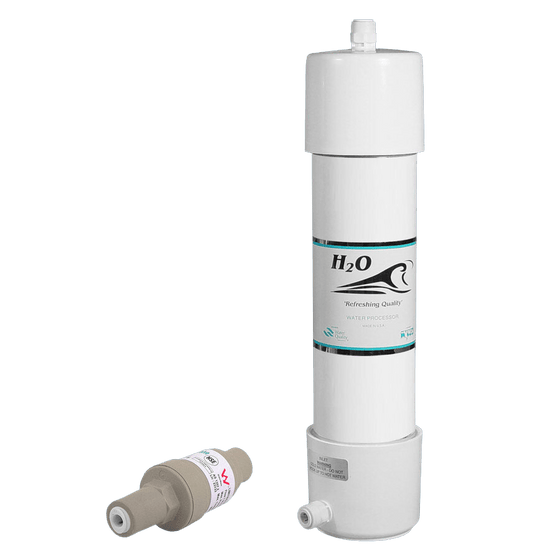
H2O-(H2O-US3-I) Inline 5 Stage Under Sink Filter


Pura UV - UV-1 EPCB 0.5 Micron Carbon Block Drinking Filter 1 GPM

Pura UVB1-EPCB 0.5 Micron Carbon Block Drinking Filter 2 GPM


QMP USA (QMP603) Two Stage Countertop Water Filter System


Watts OFTWH Tankless One Flow Anti-Scale System
Isopure Water · Drinking Water Filtration
Under-Sink & Countertop Water Filters
Point-of-use filtration systems for clean, great-tasting drinking water directly from your tap — no plumbing required for countertop models
Under-sink and countertop water filters provide targeted filtration at the point of use, treating only the water you drink and cook with. These systems deliver significantly cleaner water than pitcher filters at a fraction of the per-gallon cost of bottled water, with minimal installation effort and widely available replacement cartridges.
System Types
Choose Your Installation Style
Under-Sink Filters
Install beneath your kitchen sink and connect to a dedicated drinking water faucet or your existing faucet. Under-sink systems are hidden from view, handle higher flow rates, and use larger cartridges for longer service intervals between replacements.
Countertop Filters
Connect directly to your existing faucet diverter without any permanent plumbing changes. Countertop models are ideal for renters, light users, and anyone who wants filtered water without modifying their kitchen plumbing.
Inline Filters
Compact inline models install directly in your water supply line and are commonly used as final polishing stages for refrigerator ice makers, coffee machines, and drinking fountains. Easy to replace and require no housing or tools.
Buying Guide
How to Choose the Right System
Identify Your Water Concerns
Chlorine taste and odor is the most common complaint with municipal water and is addressed by any carbon-based filter. For lead, VOCs, or PFAS concerns, choose a system rated for those specific contaminants. If you have well water, test first to identify what you are dealing with before selecting a system.
Match Flow Rate to Usage
Countertop filters typically handle 0.5 GPM, suitable for one to two people. Under-sink systems range from 0.5 to 1.5 GPM and support larger households. Consider how many people will use the system daily and whether you plan to connect it to a refrigerator or other appliance.
Factor in Replacement Costs
Calculate the annual cost of replacement cartridges, not just the upfront price. Systems that use standard 10-inch cartridges give you the widest choice of replacement media and the most competitive pricing over time. Proprietary cartridge systems may cost more annually despite a lower initial price.
Pro Tip: Carbon block filters outperform granular activated carbon for chlorine, taste, and odor removal at lower flow rates. If you are filtering for chloramines — used by most large US municipalities — you need either catalytic carbon or a five-stage RO system, as standard GAC and carbon block do not reliably remove chloramines.
Better Taste Immediately
Carbon filtration removes chlorine, chloramines, and organic compounds that cause the flat, chemical taste of tap water. Most users notice the improvement on the first glass.
Lower Cost Than Bottled Water
A quality under-sink filter produces water for two to five cents per gallon versus one to two dollars per gallon for bottled water. The system typically pays for itself within the first two to three months.
Simple Installation
Most countertop models connect in minutes with no tools. Under-sink systems require basic plumbing — shutoff valve, supply line, and faucet connection — achievable by most homeowners in under an hour.
Reduces Plastic Waste
A family of four switching from bottled water to a point-of-use filter eliminates over 1,500 plastic bottles per year. Replacement cartridges generate a fraction of that waste.