Reverse Osmosis Membranes - Residential


Pentair (TLC) Replacement Reverse Osmosis Membrane Element

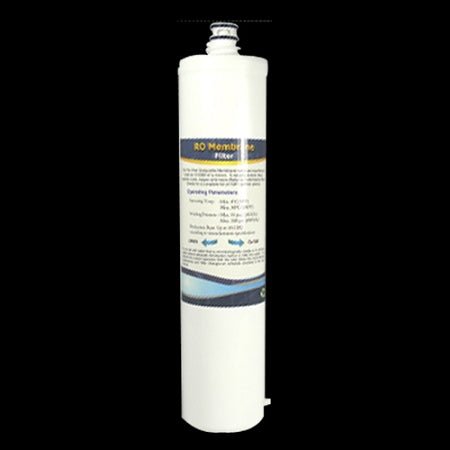
Puregen (QME-25050) 12" PROQ 50 GPD Membrane


Isopure Water · Replacement Membranes · Residential
Residential RO Membranes —
The Heart of Your Filter System
The RO membrane is the most critical component in any reverse osmosis system. When your membrane needs replacement, matching the right size, GPD rating, and brand ensures your system continues delivering water that's up to 99% free of dissolved solids, lead, fluoride, chlorine, and hundreds of other contaminants.
Residential reverse osmosis membranes use a semi-permeable barrier with pores of approximately 0.0001 microns — fine enough to block dissolved salts, heavy metals, bacteria, and organic compounds while allowing water molecules to pass freely. Unlike pre-filters and post-carbon stages that are replaced every 6–12 months, a quality RO membrane typically lasts 2–3 years when pre-filters are changed on schedule. We stock over 15 leading brands in a full range of GPD ratings — from compact 24 GPD units to high-output 100 GPD membranes — all sized to the standard 1.8" × 12" residential housing.
What Is an RO Membrane?
How Residential RO Membranes Work
A reverse osmosis membrane is a thin-film composite (TFC) element wound in a spiral configuration inside a standard 1.8" × 12" housing. Pressurized feed water enters one end of the membrane housing, water molecules are forced through the semi-permeable membrane wall, and purified permeate water exits to your storage tank. Concentrated reject water — carrying the blocked contaminants — is flushed to drain.
The membrane works in conjunction with your system's pre-filters (sediment and carbon block) which must be changed every 6–12 months to protect the membrane surface from chlorine oxidation and particulate fouling. A membrane that receives clean, chlorine-free feed water will consistently achieve 95–99% TDS rejection and last its full 2–3 year service life.
Residential membranes are designed to operate on feed water with TDS below 2,000 ppm — suitable for virtually all city and well water supplies in the US. They require a minimum of 40 psi to function, with optimal production at 50–60 psi. If your home pressure is below 50 psi, a booster pump is recommended to maintain rated GPD output.
How to know when your membrane needs replacement: Use a TDS meter to test your source water TDS and your RO output TDS. A healthy membrane rejects 90–99% of TDS. When rejection drops below 85% — for example, 500 ppm source water producing more than 75 ppm output — it's time to replace the membrane regardless of how long it's been installed.
Brands We Carry
Industry-Leading Membrane Brands
Dow Filmtec
Filmtec TW30 Series
The global industry standard for residential RO membranes. Filmtec TW30 membranes are specified by more RO system manufacturers than any other brand — renowned for consistent high rejection rates (95–99%), long service life, and reliable performance at 50 psi. Available in 24, 36, 50, 75, and 100 GPD.
GE Osmonics / Desal
GE Desal Residential Series
Spiral-wound membrane elements from one of the world's oldest RO membrane manufacturers — over 40 years of production. GE Desal membranes offer high salt rejection ideal for aquarium, marine, lab, and drinking water applications. Operate on feed water under 2,000 ppm TDS with production rates quoted at 60 psi.
Watts Premier
Watts Premier Membranes
Quality replacement membranes engineered for residential under-sink RO systems. Watts Premier membranes are designed to work seamlessly with most standard 1.8" × 12" housings and are a popular choice for routine maintenance replacements in existing systems.
Encapsulated / Inline
Encapsulated Membranes
Encapsulated membranes have a sealed housing molded directly around the membrane element — no separate membrane housing required. Ideal for quick, tool-free membrane exchanges without disturbing fittings or risking leaks. Used in modern quick-change RO systems and compact under-sink installations.
Contaminant Removal
What a Residential RO Membrane Removes
Residential TFC membranes remove up to 99% of dissolved contaminants at the molecular level. The membrane's 0.0001-micron pore size blocks virtually all ionic and particulate contaminants while allowing only water molecules to pass through.
Specifications
Residential RO Membrane Specifications
| Specification | Standard Value | Notes |
|---|---|---|
| Membrane Size | 1.8" × 12" | Universal residential standard — fits virtually all under-sink RO housings |
| Membrane Type | Thin-Film Composite (TFC/TFM) | Higher rejection rate and longer life than older cellulose acetate (CA) membranes |
| GPD Capacity | 24, 36, 50, 75, 100 GPD | Most residential systems use 50 GPD; match to your system's rated output |
| TDS Rejection Rate | 95–99% | Tested at rated pressure with 500 ppm NaCl solution at 77°F |
| Minimum Operating Pressure | 40 psi | Below 40 psi production slows significantly; use a booster pump if needed |
| Rated Production Pressure | 50–60 psi | GPD output is rated at this pressure; higher pressure = more daily output |
| Maximum Feed TDS | 2,000 ppm | Suitable for all standard city and well water applications in the US |
| Feed Water Temperature | 40–100°F | Colder water reduces output; production rates are quoted at 77°F |
| Recommended Service Life | 2–3 years | Longer life when pre-filters are changed every 6–12 months |
Applications
Where Residential RO Membranes Are Used
Under-Sink Drinking Water
The primary application — replacement membranes for 4–6 stage under-sink RO systems providing drinking and cooking water for the whole household.
Aquarium & Marine
Zero TDS water is essential for saltwater reef aquariums. RO membranes allow aquarists to start with pure water and precisely control mineral balance without interference from tap water contaminants.
Hydroponics & Horticulture
Zero TDS baseline water lets growers precisely dial in nutrient concentrations without accounting for unknown tap water minerals that can skew EC readings and cause nutrient lockout.
Lab Water Pre-Treatment
RO is used as cost-effective pre-treatment before mixed-bed DI resin to produce Type I and Type II laboratory water. Extends DI resin life significantly by removing bulk TDS before polishing.
RV & Marine Use
Compact residential membranes are used in RV on-board water purification systems and on recreational boats where clean drinking water from variable sources is required.
Cosmetic & Rinse Water
Small-scale cosmetic production and professional hair care applications require spot-free, mineral-free water. Residential RO membranes provide a reliable, affordable purification solution.
Buyer's Guide
How to Choose the Right Replacement Membrane
Match the GPD Rating of Your Existing Membrane
The most important spec is gallons per day (GPD). Your system is designed around a specific membrane output — typically 50 GPD for most residential under-sink systems. Using a higher-GPD membrane won't increase your faucet flow rate; it simply refills the storage tank faster. Check your system's owner's manual or the label on your existing membrane housing for the rated GPD.
Check Your Feed Water Pressure
Residential membranes are rated at 50–60 psi. If your home water pressure is consistently below 50 psi, your membrane won't produce its rated daily output and your tank will be slow to refill. A booster pump resolves this. If pressure is above 80 psi, a pressure regulator protects the membrane housing and fittings from damage.
Verify the 1.8" × 12" Standard Size
Nearly all residential under-sink RO systems use the 1.8" × 12" standard membrane housing. Encapsulated membranes are the exception — these have a housing molded directly around the membrane and are specific to their system. If your system has a standard screw-cap membrane housing, any 1.8" × 12" membrane will physically fit.
TFC vs. Cellulose Acetate — Always Choose TFC
Modern TFC (thin-film composite) membranes offer significantly higher rejection rates (95–99%) and longer service life than older CA (cellulose acetate) membranes. TFC membranes cannot tolerate chlorinated water however — your carbon pre-filters must be working properly. If you're upgrading from an older CA membrane system, ensure your carbon pre-filtration is in good condition before switching to TFC.
Replace Pre-Filters at the Same Time
When you install a new membrane, it's best practice to replace all pre-filter cartridges simultaneously — sediment and carbon block stages. Installing a fresh membrane on depleted pre-filters that are allowing chlorine breakthrough will shorten the new membrane's life dramatically. The small additional cost of fresh pre-filters protects your investment in the membrane.
Not sure which membrane fits your system? Have your system's brand and model number or your existing membrane's part number ready. Call us at (877) 541-6603 and we'll identify the exact replacement in seconds.
FAQ
Residential RO Membrane — Common Questions
How often should I replace my RO membrane?
Every 2–3 years under typical residential use, provided pre-filters are changed every 6–12 months. The most reliable way to know is with a TDS meter — when your RO output TDS rises to within 15% of your feed water TDS (i.e., rejection drops below 85%), replace the membrane regardless of time elapsed.
Will a higher GPD membrane make my faucet flow faster?
No. Your faucet flow rate is determined by the storage tank pressure and the faucet itself — not the membrane's GPD rating. A higher GPD membrane will refill the tank faster after it's been depleted, but won't change the flow rate at the tap during normal use.
Can I use any brand of membrane in my system?
Yes — any standard 1.8" × 12" TFC membrane will fit any standard residential membrane housing, regardless of brand. The physical dimensions are universal. The only exception is encapsulated (inline) membranes, which are system-specific. Match the GPD rating to your system's specification for best results.
Why is my membrane producing less water than rated?
Three common causes: (1) feed water pressure below 50 psi — the membrane's rated output assumes 50–60 psi; (2) cold water temperature — output drops significantly below 60°F; (3) fouled or expired pre-filters allowing sediment or chlorine to reach the membrane. Check pressure and pre-filter condition first before replacing the membrane.
What's the difference between 50 GPD and 75 GPD membranes?
GPD (gallons per day) is the membrane's theoretical maximum daily output at rated pressure and temperature. A 75 GPD membrane refills a depleted 3-gallon tank about 50% faster than a 50 GPD membrane. However, your system's drain saddle, flow restrictor, and check valve are sized for a specific GPD rating — upgrading to a higher GPD membrane may require adjusting or replacing the flow restrictor to maintain the correct reject-to-permeate ratio.
Do I need to flush a new membrane before use?
Yes. New TFC membranes are shipped with a preservative solution. Fill and drain the storage tank 2–3 times before using the water for drinking. Most RO system manuals specify a 24-hour flush period. After the initial flush, your system is ready for normal use.
15+ Brands In Stock
Dow Filmtec, GE Desal, Watts Premier, and more — the industry's most trusted membrane brands all in one place.
Universal 1.8" × 12" Size
Standard residential sizing fits virtually every under-sink RO system on the market regardless of brand.
Up to 99% TDS Rejection
TFC membranes block dissolved solids, heavy metals, fluoride, nitrates, bacteria, and hundreds of other contaminants.
Expert Membrane Matching
Not sure which membrane fits your system? Call (877) 541-6603 — our team identifies the right replacement in seconds.